Records released recently reveal the true scale of Victorians requiring emergency assistance for sunburn every year for the past 20 years, according to government records.
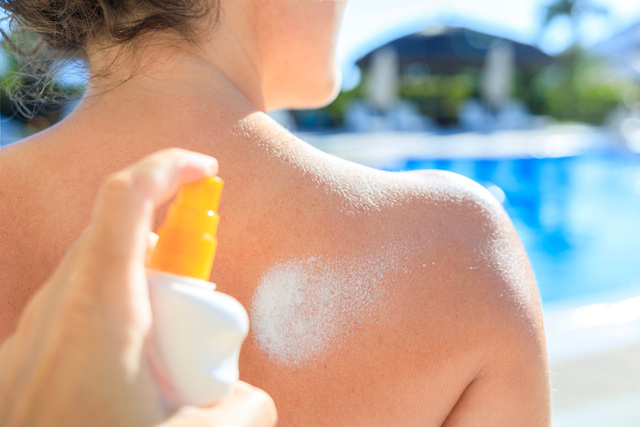
The data comes as SunSmart urges the community to be vigilant when enjoying the outdoors this summer, even on cool and cloudy days when the UV is still high.
In the 2024-25 financial year, Victoria recorded 330 emergency department presentations for sunburn – marking a 14 per cent increase from the 289 presentations the previous year.
The latest figures supplied by Victoria’s Department of Health take the presentations to public hospital emergency departments for sunburn to a total of 5672 people over a 20-year period since 2004/05.
Children and young people were most likely to present to emergency with sunburn, with people aged 0-14, 15-19 and 20-24 years making up two thirds (66 per cent) of total hospital presentations over the past two decades – representing 3738 cases all up.
While this data captures the most severe sunburn cases requiring emergency medical attention, SunSmart warns that any sunburns, and especially sunburn during childhood, can have lasting health impacts that increase lifetime skin cancer risk. Meanwhile, 2023 data from the latest Victorian Population Health Survey shows that one quarter (26 per cent) of all Victorian adults, equivalent to more than 1.3 million people, had one or more red and tender sunburns that lasted a day or more in the year prior to the survey.
Head of SunSmart Emma Glassenbury said now was the time to remind Victorians, especially young people, that every day activities put us at risk of exposure to harmful UV, the leading cause of skin cancer, at this time of year.
“People may associate sunburn risk with just a day at the beach or by the pool on holidays, but most people are caught out in everyday places – at home, in the backyard, at work, walking down the street, or enjoying a local park,” she said.
“It’s a reminder that UV protection matters whenever we’re outdoors. This data also shows that UV overexposure remains an ongoing public health challenge in Victoria.
“It’s important that continued investment in sun safety education is prioritised to shift behaviours. If the UV is 3 and above, sun protection is required.”
The survey data showed that rural Victorians were three or more times more likely than those living in metropolitan areas to experience sunburn. Sunburn was most common amongst 18 – 24 year olds with 29 per cent reporting one or two sunburns in the past year prior to the survey, and 14 per cent reporting three or more sunburns. There is an inverse relationship between sunburn frequency and ageing, whereby for people aged 75 – 84 just four per cent reported one or two sunburns in the past year and just one per cent reported three or more sunburns in the same timeframe.
Director of the Victorian Melanoma Service at The Alfred Hospital, Professor Victoria Mar, said sunburn is a sign of significant trauma to the skin cells, and this damage is cumulative, adding to lifetime skin cancer risk.
“Sunburn can be agonising and sometimes so severe it requires hospital treatment. Anyone with severe sunburn should seek medical care. Ultimately, making sun protection part of our daily routine is the best way to avoid the pain, fever, and blistering altogether,” she said.
Melbourne melanoma survivor Rhi Birch, 43, experienced her fair share of sunburn in her younger years, despite being relatively sun smart. Her story is a powerful reminder to take sun protection seriously.
“My melanoma was first spotted on a snorkelling trip on the Great Barrier Reef. A friend noticed a spot on my back and urged me to get it checked. I was diagnosed with stage two melanoma,” she said.
“My surgeon advised I’m incredibly fortunate it was caught relatively early. It’s very scary to think what could have happened otherwise.
“If I could go back in time, I’d be so much more careful with sun protection. You’ll rarely catch me without a hat, sunnies or sunscreen in my bag these days. My diagnosis was a real wake-up call; skin cancer is so common in Australia, and it’s nothing to mess around with.”
Ms Glassenbury said most emergency presentations due to sunburn in Victoria occur between November and February, when UV reaches its most extreme levels.
“Do everything you can to protect your skin this season with all five forms of sun protection: cover up with clothing, wear a wide-brimmed hat, use sunscreen, seek shade, and wear sunglasses whenever the UV is 3 or above,” she said.