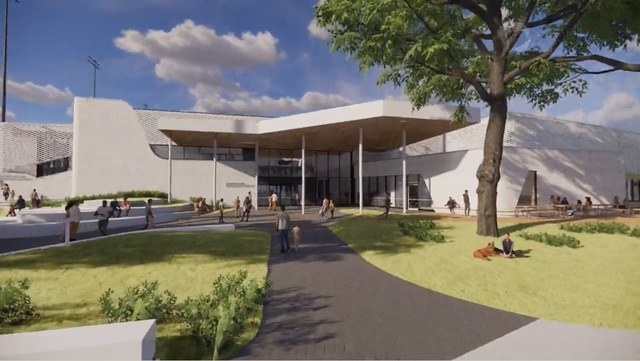

The Dandenong-based Taha Group funding controversy has forced Australia to confront an uncomfortable question.
Should taxpayer money be funding religious or culturally-exclusive organisations at all?
Because once government money enters that space, politics inevitably follows.
The controversy began when the Federal Government withdrew a $676,000 grant previously allocated to the Taha Association Centre.
On 4 March, Minister for Multicultural Affairs Anne Aly confirmed the funding had been cancelled due to “social cohesion concerns” following a departmental review.
Her reasoning was clear.
“Like all governments, we do give grants to community organisations, whether they be religious organisations, for mosques, temples, for sporting groups, but we take seriously our expectation that the activities of those organisations are conducted within the rule of law and within the expectations of taxpayers and the standards that taxpayers expect.”
The review followed reports that memorial services had been held at the centre mourning Ayatollah Khamenei, a highly influential figure for many Shia Muslims but also widely criticised internationally and accused by some governments of supporting terrorism.
The Taha Association responded with a statement saying the gathering was purely spiritual, describing it as mourning the loss of a religious leader in a way comparable to Catholics mourning the death of a Pope.
They argued the event had been misrepresented and called on the government to reconsider the funding decision.
But regardless of which interpretation people believe, the controversy highlights a bigger issue.
Why are taxpayers funding religious or culturally exclusive organisations in the first place?
Because when governments fund places of worship, community buildings tied to specific faiths, or culturally specific celebrations, they inevitably create tension.
Not because Australians oppose religion.
But because public money should serve the entire public.
Australia spends significant amounts on multicultural programs.
Federal budgets include hundreds of millions of dollars allocated to social cohesion initiatives, including funding for multicultural festivals, community events and grants to cultural organisations.
These include events such as Ramadan iftar dinners, Diwali celebrations and other community festivals across the country.
These celebrations are meaningful to the communities involved.
But the question remains: Should they be funded by taxpayers?
Because when public funds support one cultural celebration, every other group will rightly ask why theirs is not funded as well.
The same logic applies to infrastructure. Mosques. Temples. Churches. Gurdwaras.
These institutions are deeply important to their communities.
But historically they have always been built through community effort, fundraising and volunteering.
Once governments start funding religious infrastructure, resentment becomes inevitable.
This includes when funding is used to create multi-faith spaces but one gender is excluded.
Not because Australians reject religion.
But because taxpayers expect neutrality.
The same pattern is now appearing in sport.
Increasingly, grants are used to support culturally or religiously specific sporting organisations.
Yet sport has always been one of Australia’s strongest tools for integration.
Real integration happens when young people from different backgrounds play in the same teams, compete in the same leagues and represent the same clubs.
Not when communities play separately under different banners.
This is not about abandoning culture.
Languages should be preserved.
Faith should be respected.
Communities should celebrate their traditions.
But multiculturalism was never meant to create parallel societies.
The promise of Australia has always been something else: One country. One civic identity. Many cultures – but shared belonging.
Perhaps it is time to rethink the role of government funding in multicultural policy.
Support programs that genuinely strengthen cohesion:
– English language education.
– Employment pathways.
– Mental health services.
– Domestic violence support.
– Youth engagement in shared community spaces.
But when it comes to festivals, religious infrastructure or culturally exclusive organisations, the responsibility should sit with the communities themselves.
Australia does not need less diversity.
But it does need clearer boundaries about how public money is used.
Because cohesion cannot be bought through grants.
It is built through shared experiences and shared institutions.
Truth be told… when taxpayer money starts funding identity politics, social cohesion becomes harder – not easier.