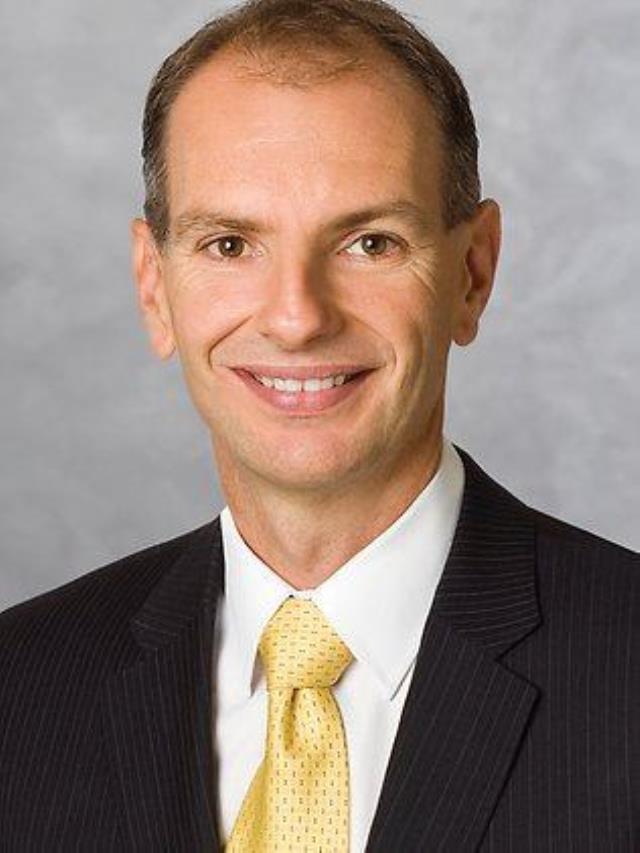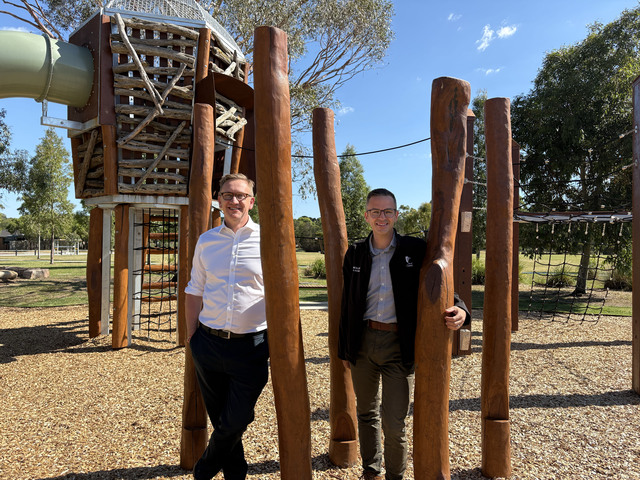
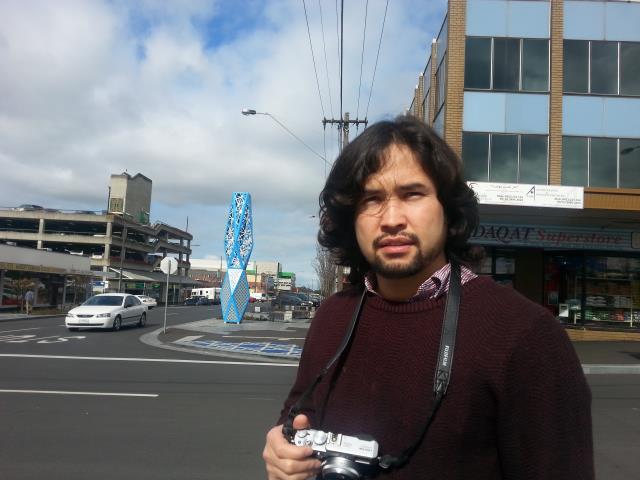
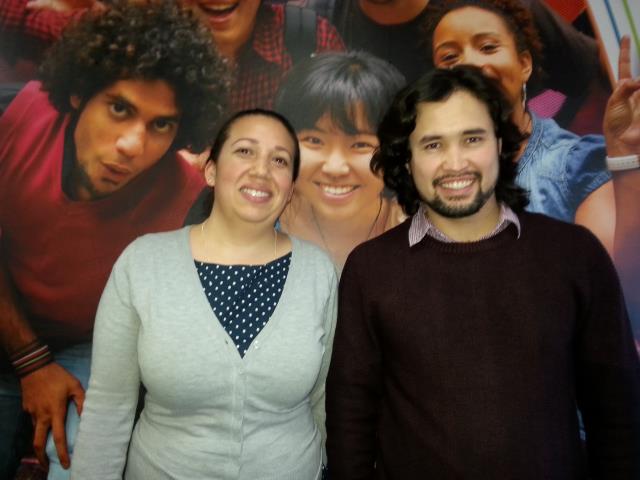


With lived experience as a refugee, Barat Ali Batoor is well-placed to observe the hardships faced by the many refugees and asylum seekers that call Melbourne’s South East their home.
Australia’s border policy was recently thrust into the international limelight thanks to the Novak Djokovic visa saga – but while the tennis star is now back home, the refugees he briefly shared a hotel with remain behind thick glass and locked doors.
Batoor, who now works as an organiser for the Asylum Seeker Resource Centre, hopes the focus on their plight will continue and lead to more positive outcomes – and an end to such detention for refugees and asylum seekers.
He said the media and politicians had been complicit in the dehumanisation of refugees over the years by deflecting attention from their experience.
“They are not Novak Djokovic. They don’t have that profile, but humans suffering don’t need to have a big profile to get attention,” he said.
He added the common political narrative of refugees as a threatening presence was utterly false.
Across Australia, refugees are some of the nation’s best sports stars, or are working in law, or education, he said.
But he added that a human’s worth should not be assessed economically.
“That phenomenon of being a burden is a false narration by the government and some media outlets.
“I have never been a burden; I have been working since the day I arrived.”
As the country teeters on the brink of an election campaign, Batoor said he hoped people would recognise the power in their vote.
He is advocating for an increase in the humanitarian visas being offered to those fleeing Afghanistan, fleeing daily torture and persecution.
He wants to see those refugees already in Australia, languishing on temporary protection visas, granted permanent residency.
And he wants the ban on resettlement from Indonesia to finally be lifted.
“This is going to be a crucial election for over 30,000 people who are living uncertain lives,” Batoor said.
“We have witnessed many refugees who took their own lives because of the uncertainty and the unfair treatment by the government and the harsh policies.
“Your votes will matter and you have to choose candidates who are compassionate. Your votes will help save a lot of lives.”
Born in Pakistan as a refugee, Batoor moved to Afghanistan in 2005 where he worked as a photojournalist for many major publications.
One of his highest profile pieces was a photo essay exposing the prostitution of ‘dancing boys’ by Afghan warlords, published in the Washington Post.
But the piece was not well received by authorities within Afghanistan, and Batoor soon began receiving death threats.
He and his family shifted back to Pakistan, but things there weren’t much better; as Hazaras, they were targeted for persecution by state-backed militants in the street.
That was when Batoor’s family told him to leave and seek asylum elsewhere.
He left behind his disabled mother and his sisters, who he said would have been too vulnerable to make the difficult journey under the guidance of people smugglers.
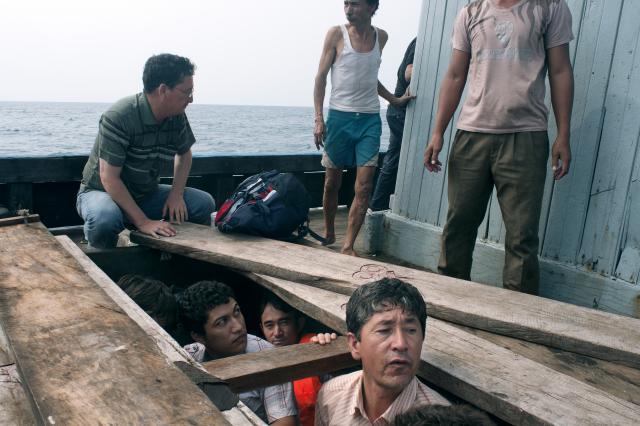
The journey to Australia was terrifying. At one point, Batoor said he and his fellow refugees – close to 100 people, crammed into a boat floating on the open ocean – thought they had reached “the end of life’s journey” when their boat began leaking.
He survived and made it to a detention centre in Indonesia – from which he promptly escaped the follow morning.
He was among a group of eight men who removed the glass panes in the window that separated them from the outside world, slipping into the dead of night as the guards passed on their rounds.
The refugees had no shoes, as these had been taken during a strip search when they were captured.
The tall wall surrounding the camp was topped with shards of glass, so they wrapped their arms in bed sheets and used pillows to soften the climb, before leaping to freedom on the other side.
From there, Batoor called a media friend and asked him to cover the taxi fare to take the group to Jakarta.
True to his photojournalism roots, Batoor documented the whole journey, which was eventually turned into a SBS Dateline documentary called Batoor’s Journey.
The photos also won him several prestigious awards, including two Walkleys.
He said he experienced a profound sense of relief when he arrived in Australia in 2013.
“I knew that this is going to be my home, my permanent home. I would be safe and not discriminated against and I wouldn’t have any safety issues,” he recalled.
But it was tempered by sadness for the family still left behind in Pakistan, and his fellow refugees in limbo in Indonesia.
He still hopes to be able to sponsor his mother and sisters to come to Australia.
“It’s still very difficult, we have been apart now for almost 10 years. They are there and I am here.
“What can we do?” Batoor said.
“My mother was worried about my safety, she didn’t want me to get killed in front of her eyes. They said I had to go.”
Refugees are often demonised by politicians and the press with the only help available to them in the form of people smugglers.
Batoor said this was his only option for leaving Pakistan.
“It is very difficult to get a visa for the neighbouring countries let alone to go somewhere safer, like countries that are signatories to the (United Nations) refugee convention. When they have genuine threats or reasons to leave their homes, it is almost impossible to get to those countries through
proper channels.
“When the threats came, I didn’t have an option to go and apply for a visa. I had a passport. Even if I had gone through official processes, I wouldn’t have got a visa to come to Australia.”
Then of course, there is Australia’s unforgiving refugee policy, which bans resettlement of refugees from Indonesia.
The policy has led to a spate of self-harm and suicide among refugees stuck in limbo, he said.
“They said ‘we are stopping the boats and the smuggling business because people’s lives are at risk at sea’. But what Scott Morrison failed to do was propose an alternative for refugees who are there with hope of resettlement,” Batoor explained.
“The right of a refugee is to seek safety.”