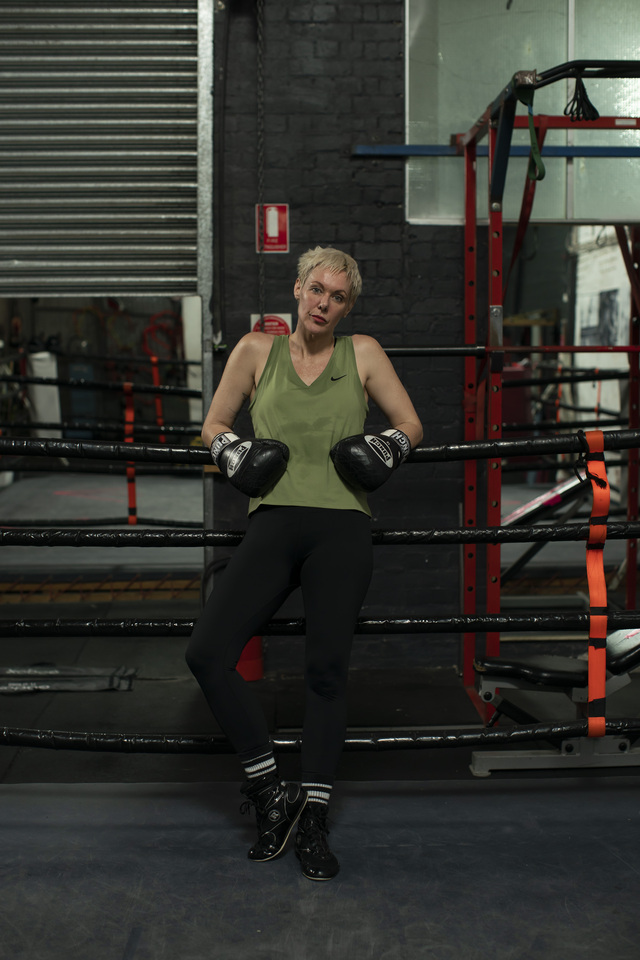
Tackling trauma has never been an easy task, and finding an effective medium for it has proven to be much more difficult, but for Left Write Hook, the uncanny combination of boxing and creative writing has proven to be the needed combination for conversations on sexual assault.
With the documentary recently winning the Audience Award at the Melbourne International Film Festival, program founder and producer, Donna Lyon sees the documentary landing in the City of Casey on 25 November as a step forward in advocacy and transparency for those suffering childhood sexual trauma.
The eight-week program, on which its genesis began in 2019, bloomed into a full-fledged initiative in 2022, becoming an organisation as well as undergoing the process of filming; ultimately culminating in a message of resilience, hope and strength.
Lyon, who has lived experience of being a survivor of childhood sexual abuse, said that its “impacts were deep and lasted many years”.
“So when I went on a process of healing and recovery, part of that was finding boxing, and at the beginning, it felt like a sport where I could release my anger, but I quickly discovered that it wasn’t about that.
“It was actually about mindfulness, and it was probably the first time I began to feel a real sense of power and agency in my body,” she said.
After going on a two-year amateur fighting journey, and subsequently racking up more losses than wins, Lyon realised that she wasn’t “meant to be a competitive fighter”, but the love for training, the sport and everything that “it gave to me” was true, and it stuck.
“I felt like I wanted to meet other survivors and work with them in a setting of boxing; but I didn’t just want to teach boxing,” Lyon said.
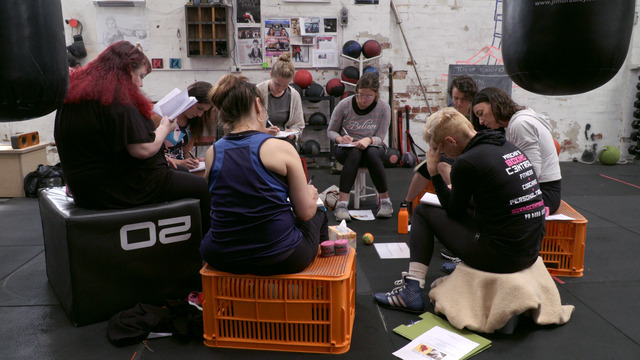
With a background in creative arts and filmmaking, Lyon had a vision, of introducing creative writing into the group, combining it into a formula where boxing served as a medium to exert one’s emotions but then channelling them through the act of writing.
Lyon acknowledged that being in the group in itself is a bold endeavour, to let oneself be open and vulnerable to others with lifelong trauma is no easy task.
However, “very quickly people forged incredible bonds in the group, and there’s an incredible amount of strength that comes with the vulnerability of sharing”.
“What happens is people tend to move from a very internal space often full of fear and trepidation, but as they begin to write and share and reflect, and then box, they begin to move into a form of empowerment and it’s really beautiful to watch.
“There are incredible transformations taking place and we’ve done a lot of research that actually provides evidence to suggest this is happening, and that there’s an incredible effect on people’s mental health and well-being,” Lyon said.
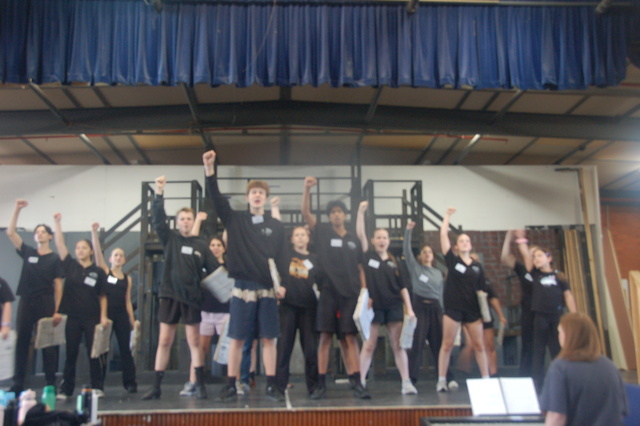
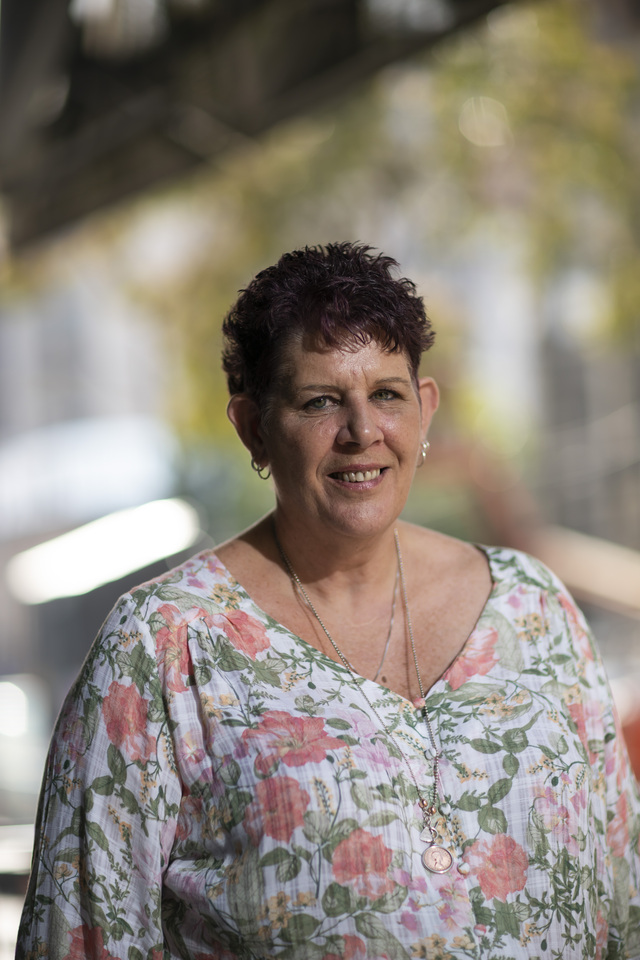
Julie, the very first member of the program and one of many actors in the film, said that what the program has done for her has been life-changing, and delivering its messages out to the public, through exposure in film or other forms of media is integral in what Left Write Hook aims to do.
For her, being through an array of different therapies and finding no solution, Julie’s choice of joining the program was a last-ditch effort that instead turned her world for the better.
“I’ve been through a lot of therapy, a lot of hospitals and not with great outcomes so I had nothing to lose,” she said.
“I love writing, but I’ve never boxed in my life before, so I said, ‘let’s see where it goes’, but of course, it was scary you know, it’s something you don’t talk about with anyone and going in a room filled with other women who are all survivors, I’ve never experienced that before.”
Being a shy person, it was difficult at first for Julie to open up, but once she began to listen and observe how everyone was being open about their experiences, it gave her the drive to do the same, recalling that she felt “this ease come over me”.
“I started talking about things that I’d been told to be quiet about for such a long time, trauma’s not talked about in the community and it’s a bit of a taboo subject, but I felt quite comfortable and I wasn’t judged.”
Being part of the film, Julie admitted that it was strange to have the cameras around at first, considering that it made her conscious and she “held back” and didn’t “share a lot”; but once she and the others got into the program, it was business as usual.
“Once the writing prompts are down, you go into your own space and you write for 10 to 15 minutes or so and then you’re boxed in and you are at your most vulnerable state in that space – but in all honesty, you don’t realise the cameras are there and you’re just your true self.”
Despite the cameras, “everything comes out, there’s sweat, tears – there’s a lot of crying, hugging, a lot of emotional surges from people”.
“The program, with the boxing especially, gives you a sense of power back in your own body again, when you have that sense that your body isn’t yours and you feel very violated, but when you’re boxing, it empowers you and you feel strong.”
The combination of writing and boxing allowed the participants to be able to express their emotions, whatever they may be, through different mediums at different levels, stable and steady through writing and heavy and strong through boxing.
The two activities served as the perfect combination of displaying one’s feelings and being vulnerable but also, as with Julie’s expression, assuming authority over what was once yours.
Safe spaces, that is the goal of the program, and are something that Lyon continues to pursue in order to have that “real transformation” and impact on people’s mental health and well-being.
“Our program isn’t about trying to read traumatised people, it’s about gently using creativity and boxing as an empowered way to release and reclaim narratives,” Lyon said.
“Those are the biggest challenges, but we go slowly, and we know people need to just make sure that they’ve got the right therapeutic or mental health support in place because you want to make sure that it’s not meant to destabilise people.
“It’s there to help them grow, but something through that there can be some discomfort, which I think is a healthy way to grow,” she said.
Likewise, during the process of filming the documentary, a “trauma-informed approach” was ensured, one that gave the participants as much choice and agency throughout the filming journey as possible.
Through doing that, Lyon, the other producers and director Shannon Owen were able to capture that presence of vulnerability and strength with the participants in tow to deliver a message of having that conversation.
“Sexual violence statistics are alarming and they’re very high across women and men that cause long-lasting impacts of trauma, and I think that our film offers a really incredible insight into the effects of that trauma,” Lyon said.
“It opens up a conversation about how it manifests in the lives of people and I think that it will give people a sense of empowerment about how to have these conversations and how to sit with difficult subject matters like child abuse.
“This film, in its heart, is a real story of resilience and hope, and I think because it allows people to engage with the difficult topics in an easier way.”
Both Lyon and Julie admitted that the program has changed them, and allowed them to find themselves when they both previously thought it impossible, and they want the film to be able to show that same possibility to as many people as possible.
“Fundamentally I think I’ve changed during this whole process and I feel grateful for that, that I’m in the film and in many ways healing alongside the group of participants,” Lyon said.
“I know I founded it, so they were my ideas, but I think my engagement with those ideas became deeper and more connected to actually who I am rather than what I’m trying to say.”
The way the program has changed Julie has been enormous, where she said that after going through everything, “I feel like I can stand up for myself”.
“I can say no to people, even if it’s something small that I don’t want to do, I’m emotionally stronger, I’m not afraid of the repercussions.
“I’m more open with people as well, especially with the film and doing the Q and As, if they ask me a question I’m happy to answer, I’m not ashamed any more of my trauma.”
Registered as an official charity in 2022, Left Write Hook has had 68 participants take part in the program throughout 13 different locations in Melbourne, but Lyon is eager to bring this to the national stage and deliver the message to more and more people.
Once more, the movie will be screening in the Village Cinemas at Westfield Fountain Gate on Monday 25 November, from 6.15pm to 8.45pm.
For more information please visit events.humanitix.com/left-write-hook-documentary-screening
Help is available.
In an emergency, call triple-zero (000).
1800RESPECT is the national domestic family and sexual violence counselling service. Call 1800 737 732 or chat online at 1800respect.org.au