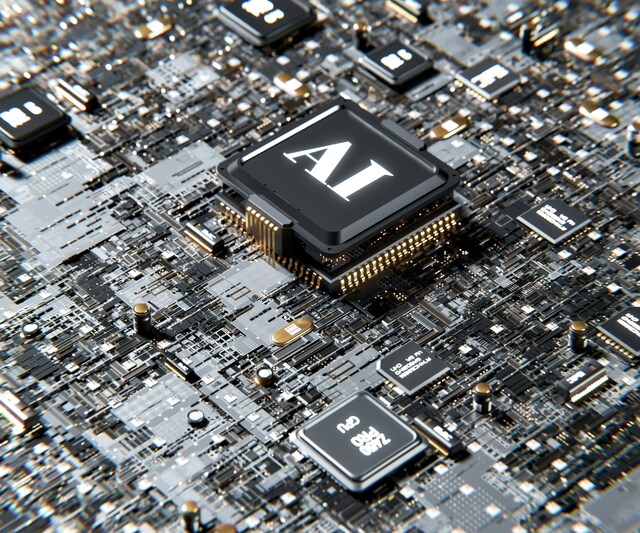
Researchers from CQ University recently published that artificial intelligence is transforming Australian classrooms, rewiring young people’s brains, which could impact cognitive learning.
Dr Ragnar Purje and Professor Ken Purnell have been exploring the neurological impacts of AI use in education, where they uncovered a complex picture.
While AI tools can support students, especially those with additional learning needs, they may also hinder the development of vital cognitive skills.
“AI systems can adjust content to match a student’s needs, interests and learning pace, which is incredibly powerful,” Dr Purje explained.
“But if students become passive recipients rather than active participants in their learning, we risk weakening the very brain networks they need for critical thinking and memory.”
The CQUniversity team claimed that students using AI to generate essays showed a 47per cent drop in active neural connections, from an average of 79 to just 42 per cent.
Daine, a 17-year-old high school student in Clyde North, said that the use of AI has become more normalised in school settings, especially when Google recently introduced their AI summary feature.
“A lot of students use AI these days, because it does make things much easier,” she said.
“You can ask ChatGPT to write you an essay on anything, and it’s done; but the teachers do ask us to rely on AI more for ideas, not our entire work.
“Obviously, we have to do our own work, but I know a lot of students who just use it to do their work [for them,] and it’s definitely impacting their grades.”
Another statistic from CQUniversity expanded that 83 per cent of those students who use AI for generating essays could not recall the content they had written just minutes earlier, a phenomenon they described as ‘cognitive debt’ or ‘digital amnesia’.
“Neuroplasticity, the brain’s ability to adapt, is strongest during childhood and adolescence,” Professor Purnell said.
“But that same plasticity means young brains may be rewired by over-reliance on AI, potentially compromising executive function, self-motivation and decision-making skills,” they said.
For Daine, her personal observations during school were that she felt that the use of AI “is not even learning, it’s just a shortcut to get something done”.
“I know people who rely on AI a lot, such as for average questions, day-to-day things, such as workouts and so on,” she said.
Further findings from CQUniversity suggest that students using large language models like ChatGPT often develop shallower knowledge compared to those who research and synthesise information manually, even when both groups access the same content.
The research also highlighted the importance of physical play and unstructured learning, where countries like Finland, which emphasise outdoor play and limited screen time in early education, consistently rank high in academic performance.
“Cognitive development doesn’t happen in isolation, it’s shaped by movement, interaction and challenge,” Dr Purje said.
“When students lose opportunities to play, solve problems, and struggle a little in their learning, we miss a chance to strengthen essential brain pathways.”
The unreliability of AI was also another concern for Daine, and something that she thinks should be highlighted, especially when used in educational and contextual settings.
“I think when we search for answers, it can be unreliable, especially with AI.
“There are heaps of times that it’s given us wrong information and everything, and we don’t even realise it,” she said.
Despite these concerns, the researchers are not calling for a rejection of AI, but more so a balance of it in education.
They are urging educators and policymakers to strike a balance, leveraging the advantages of personalised learning tools without undermining core cognitive development.
“AI is here to stay, the challenge is to use it wisely, encouraging students to remain actively engaged, think deeply, and still do the hard work with learning,” Professor Purnell said.
“That’s how we build not just knowledge, but also capability.”