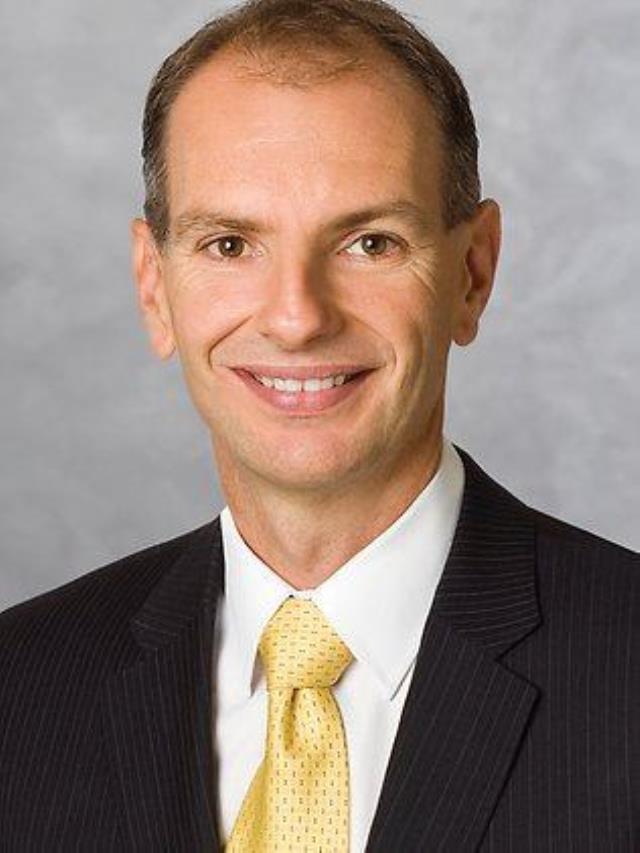
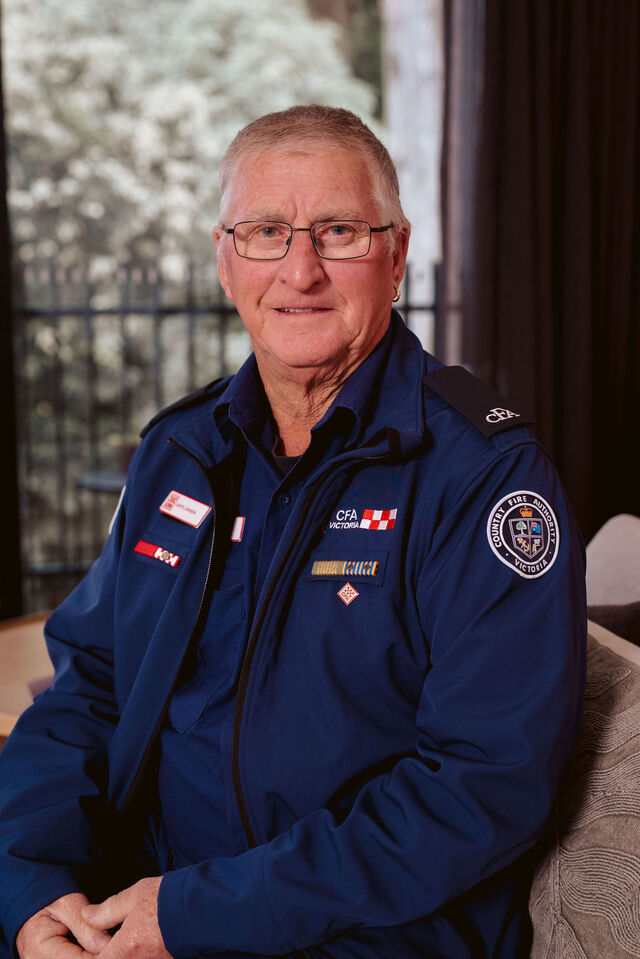
Veteran CFA firefighter Andrew Garth Johnson has been awarded the Australian Fire Service Medal as part of the Australia Day Honours.
Before moving to Drouin CFA a few months back, Andrew spent much of his 46-year career in emergency services with Langwarrin CFA and is widely recognised for his advocacy for the mental health of emergency service workers.
Based near Cranbourne, Langwarrin CFA serves one of Melbourne’s fastest-growing corridors and has long been a key rescue brigade for the region.
Last year, Andrew shared his lived experience with the Emergency Services Foundation (ESF), shedding light on the self-stigma that still exists within emergency services and how open conversations can help dismantle it.
In 1992, Andrew was called to a car accident, which involved the children of his friend. In the days that followed, Andrew refused counselling, believing that he was fine.
He threw himself deeper into the job, responding to every rescue call he could, often more than 200 a year.
Over time, he was getting cranky, arrogant, and obnoxious without noticing. His business collapsed. His family life suffered.
A year after the crash, the friend died by suicide after a coroner’s finding placed responsibility for the accident on him.
“I can remember lying in bed one night, and for just some stupid reason, I started counting how many fatalities I’ve been to. I got to 130, and I stopped counting. Because I’m thinking this is ridiculous,” Andrew said.
“Why am I counting how many fatalities I’ve been to? And I can remember every one of them. Every one of them, location, the time of day, the day that it was. And it’s just part of having PTSD, I suppose.”
It would take Andrew 23 years to seek proper help.
He remembered that A4 sheet, printed with what was wrong with him: severe depression, severe anxiety, severe stress, PTSD. But he felt the world had been lifted off his shoulders.
“I was on cloud nine, going, wow. This is what’s wrong with me,” Andrew said in his sharing with the ESF.
“This is what’s been happening. But it wasn’t to end there.”
What followed was healing, slow, deliberate and supported by people who understood emergency services. Medication. Therapy. The recovery would not have been possible without the support of his wife, who also works for CFA. She helped him and pushed him in the right direction.
“The one that triggered me, I have this photo in my brain, and I see it every day. Every day. But I can manage it,” Andrew said.
“I was taught how to manage it through my psychologist.”
Today, Andrew and his family are loving life. They also travel across Victoria to speak with brigades and communities about mental health.
The real danger of traumatic work was not a single incident, but the way experiences quietly accumulated over time, especially when they were never spoken about, Andrew said, looking back now.
“If you don’t get it off your chest and you bottle it up, which most men do, especially men, females do it as well, but what I find is men, they won’t talk about because there’s a horrible stigma there.
“They feel like they’re ashamed and they don’t talk about it, and they don’t cry, unless they’re behind closed doors. The cumulative effect was huge with me. I was just getting worse and worse and worse in my mental health. I just denied that there was a problem.
“That’s why I do it now. And it’s just to break down that stigma to get, especially men, to start talking about their mental health. It’s okay not to be okay.”
Despite his mental struggles, Andrew said he never felt fear when responding to emergencies.
When the pager sounded, he would shift into a calm, cool, collected mindset.
“I’m more scared of everyday life than I am of the fire brigade,” he said.
“I see this stuff on the TV, like everybody else, about all the crime and all that in the state, and it frightens living daylights out of me.
“But I can go right into a burning home and extricate somebody out and not think another thing of it.”
Speaking about the medal, Andrew shared that he received a nomination email on an ordinary day in October.
He and his wife were sitting outside a Melbourne café, waiting for a doctor’s appointment, when Andrew flicked through his inbox. He got a second email on approval at Christmas time.
“I’m very humbled to get it. I did not see that coming at all. It was a shock,” Andrew said.
“I don’t think I’ll celebrate it. I don’t see it as a celebration.
“I’m very humble about it because a lot of people do a lot of things in CFA, and I just see it as part of my job. It’s what I volunteered to do, and that’s why I did it.
“I don’t do it for accolades or medals, or I just do it because I love doing it. It’s very humbling because there are a lot of people who have done more than me who haven’t got it.”
According to a 2021 research paper on Australian & New Zealand Journal of Psychiatry, police and emergency service workers report significantly higher rates of suicidal thoughts than the general population.
The research linked increased risk to cumulative trauma and workplace stigma, while highlighting that strong support networks and open conversations can reduce harm.
A story by The Conversation in 2022 noted that between January 2001 and December 2016, there were a recorded 197 suicide deaths of current or former emergency services personnel.
Those in need of assistance should call Lifeline on 13 11 14.