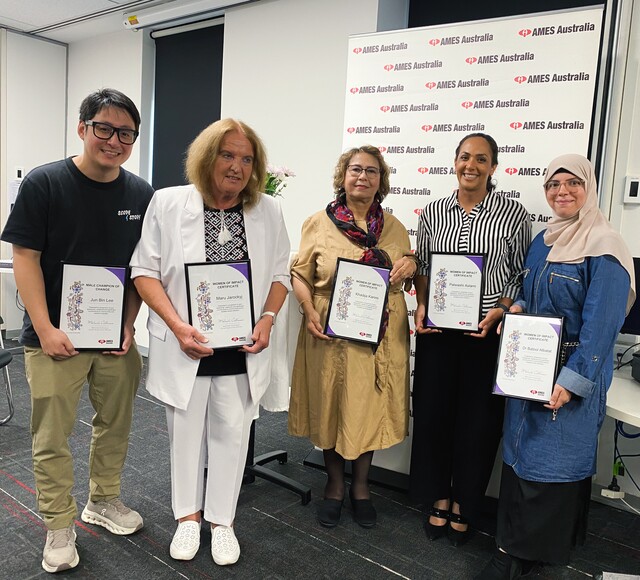
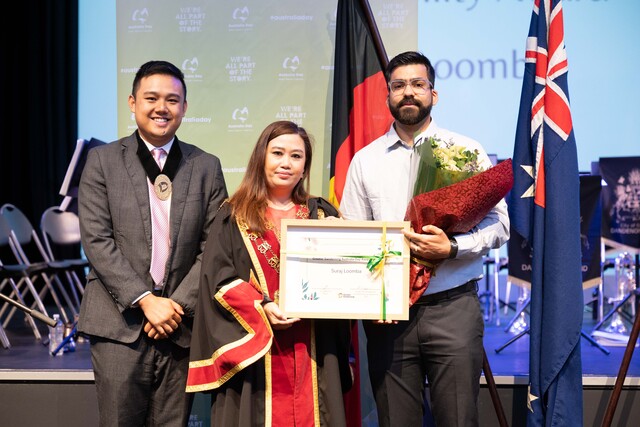
A Noble Park scientist who is forging world-first hydrogen-energy technology has been awarded City of Greater Dandenong’s Sustainability Award.
Suraj Loomba, who arrived in Australia on a student visa in 2018, says it’s great to be recognized by the community he lives in.
“It was the proudest moment of in my life.”
As part of his PhD research at RMIT University, developed a novel method of splitting seawater into hydrogen and oxygen.
This emissions-free method bypasses the need for desalination or for using precious freshwater supplies.
It also cuts the enormous expense of producing ‘green hydrogen’ – compared to deriving hydrogen from fossil fuels.
Loomba’s research has won a Youth Energy Competition in the Asia-Pacific region and second prize at the Royal Society of Society’s Young Scientists Research awards.
He said the aim was to make green hydrogen part of an affordable, renewable future.
“We know how climate change has affected our country.
“We’ve seen how the temperature has been fluctuating in the past month or so, and how devastating that floods and fires have been for communities.
“It’s high time to focus on sustainable energy sources.”
He says the focus should be on bringing more renewable technologies online, with fossil fuel supplies ever-dwindling.
The advantage of green hydrogen is it could generate continuous power, not dependent on weather such as solar and wind farms.
The power can be used or stored in hydrogen fuel cells, akin to what’s in ‘hydrogen’ cars. Safety concerns from hydrogen’s flammability or “large energy density” can be managed.
“A major goal is to meet each country’s different safety requirements.”
The challenge is finding a way to commercialise the hydrogen technology in Australia. However, there has been interest in Japan and India, Loomba says.
Loomba’s interest in hydrogen tech was piqued as a high school student in India.
He migrated to Australia in 2018 on a student visa to study his Masters and PhD in materials engineering and electrochemistry at RMIT.
Now an Australian citizen, the chemical engineer is currently working at South East Water’s operation control centre.
He remains connected to his RMIT collaborators in his spare time.
They have started looking at filtered, purified waste water to generate hydrogen
“I think it’s great to stay connected. I would love to help them achieve something.”