Judaism has a blessing for everything: for seeing a rainbow, for hearing good news, for waking up, for eating, even for going to the bathroom.
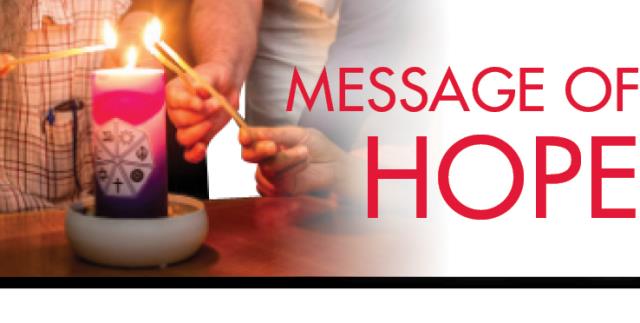
Every Friday evening, Jews around the world light candles.
Not because the week has been kind, and not because everything feels right in the world, but precisely because it isn’t.
The candles are lit as the light fades, not after it has passed.
But there are times when offering a blessing feels almost defiant: when the words catch in the throat, when gratitude feels out of sync with how we feel or with the world’s reality.
Yet Judaism asks for the blessing anyway.
Not as denial, but as grounding.
From lighting candles in darkness to reciting blessings after loss, hope is something we Jews do, often before we believe it will work.
That instinct is not unique to Judaism.
Many faith traditions understand that when the world feels fragile, hope can’t be left to emotion alone.
It needs structure. Ritual. Repetition. Something sturdy to carry us when confidence runs thin.
In Jewish life, hope shows up less as optimism and more as practice.
We mark time with rituals that insist on meaning even when meaning is hard to find.
We pause for Shabbat not because everything is resolved, but because rest itself becomes an act of resistance.
We speak words of gratitude not after the danger has passed, but while vulnerability is still present.
Jewish hope is built willingness, not on certainty.
Even at Sinai, when the Israelites received the Law, they said, “We will do and we will hear” (Exodus 24:7).
Action first. Understanding later.
The Jewish response to loss and uncertainty also reflects this.
In the rawness of grief, we recite the Mourner’s Kaddish, a prayer focused on life and sanctification with absolutely no mention of death.
Jewish hope doesn’t deny pain. But Jewish hope refuses to let it have the final word.
Across all faith traditions, hope is demonstrated in the small acts that affirm life, dignity and responsibility.
Hope looks like showing up, again and again, not because we are sure all will be fine, but because choosing to act is itself a declaration that the future is still open.
Hope is a practice we all need to return to… together.
Enquiries regarding the Interfaith Network, City of Greater Dandenong: administration@interfaithnetwork.org.au or 8774 7662.
Visit interfaithnetwork.org.au/