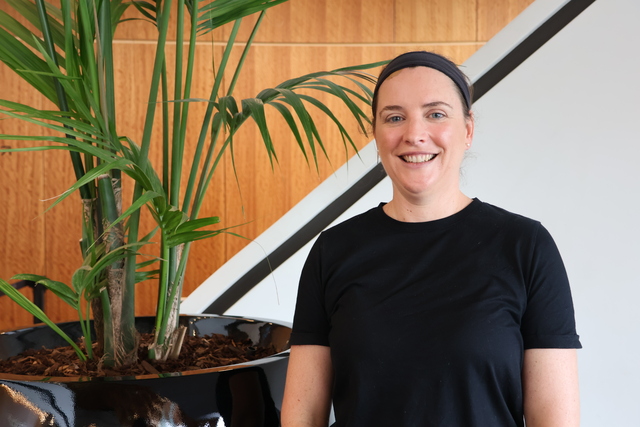
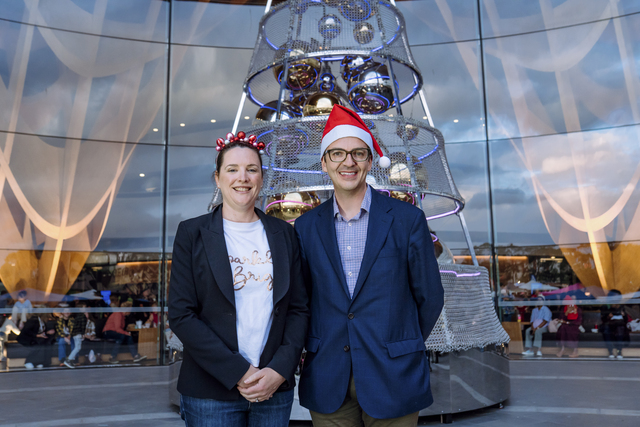

Four months into her role, City of Casey Deputy Mayor Cr Michelle Crowther said managing rapid population growth in southern Casey while advocating for better infrastructure and services will remain key priorities for the year ahead.
“Currently, we have the population of Canberra here in Casey, and we’re going to have the population of the whole of Tasmania here in Casey in 10 to 15 years,” she said.
“You just think about the services and infrastructure they’re lacking already, and we have to advocate strongly so that Casey residents get their fair share and don’t get left behind, whether that’s from children in maternal health and kinder, or whether it’s transport.
“It’s an opportunity but a challenge.”
Cr Crowther, whose ward is Cranbourne Gardens, spoke with Star News about public transport, revitalising Cranbourne’s town centre, the rabbit problem in southern Casey, planning disputes, and the pressures facing Casey’s fast-growing southern suburbs.
Q: You mentioned the need for the infrastructure, so what public transport projects are you going to advocate for in southern Casey?
Cr Crowther:
Public transport is going to be a big part of our state election advocacy campaign. The council is developing an advocacy campaign involving all of the councillors, which will be coming in quite a few weeks. We’re going to be advocating for public transport all over Casey, but our main three priorities are Clyde Rail, improving bus routes and also Thompsons Road duplication.
I think the bus one is probably an easier one to win on at this point. We have bus stops that don’t actually have bus routes that go to them. We have that huge demand in the new areas of Clyde and Botanic Ridge as well. I get a lot of requests from Botanic Ridge to get to the station because it is very hard to get a car park at Cranbourne Station.
You have to be there before 7am. Otherwise it’s a very long hike. And if we had better bus frequency and connections to the train station, that would encourage people to use the bus rather than park at the station.
Q: Then how confident are you about the Clyde rail extension?
Cr Crowther:
I understand the community is frustrated because we have been promised it a number of times. I’m not sure about the confidence in delivery. I think it’s just one that is so important.
I don’t think we should stop advocating even if we don’t think it’s likely to happen this year, but I still think it’s worth advocating for and looking at it as part of a package of broader public transport.
You look at Cranbourne station, and it’s the car park that is full. You think about that area of Cranbourne, it’s servicing such a huge population, even out to Pearcedale and Devon Meadows. It wouldn’t just help the people of Clyde get Clyde Rail. It’s actually all of southern Casey.
Q: Do you want to say anything on the Thompsons Road duplication? Do you think that of all three priorities, it is the lowest one?
Cr Crowther:
Not a lower priority, but it’s a different priority. So that one is really linking up. We have a lot of housing in Casey, and Cardinia has a lot of employment lands.
It’s another avenue for Casey people to be able to easily access employment without having to go on the Monash. It’s almost going against the traffic to go that way to employment. So, we do realise that a lot of people travel outside of Casey for work, and that influences liveability, the time spent travelling, and those things do impact families and liveability. So, having local employment opportunities is actually something that will improve things for our community.
Q: We just talked about local employment opportunities, and I really want to now talk about the economic situation in Cranbourne’s High Street. Does the Council have any plan to revitalise that area? To make people actually go there and attract new businesses?
Cr Crowther:
Activity centre revitalisation across Casey is a part of the councillor group’s focus. It’s probably an issue that we’ve really pushed and have got on the agenda. In terms of Cranbourne, it’s a tricky one because it’s a state road as well as a council concern.
We have the Master Plan, which came out quite a few years ago, but as you can probably see there has not been a lot of progress yet on that Master Plan.
But a few good things have happened. The main traffic now is diverted to Narre-Cranbourne Road, so that means that High Street is no longer the A Road anymore.
Now, what the Council is doing is actually advocating to the State Government to get the speed limit reduced.
If we can get that down, then we can get the trucks off High Street and then that will improve the amenity of the area. We’ve also invested already in security and lighting at Greg Clydesdale Square, and I think we’re going to continue to advocate for that and to try and make that like a community hub. I went on Saturday (7 March), and they had the Harmony Festival. Was really good. So hopefully we can actually activate that more for the community as well.
Q: Bunjil Place always has a lot of amazing events. Do you have any ideas for big, major events at central Cranbourne?
Cr Crowther:
Cr Eaves and I are onto that. Just trying to bring more away from Bunjil and more to Cranbourne. We are advocating at every chance we’ve had, follow-up meetings after last year’s Winter Arts Festival and say, well, why wasn’t there more in Cranbourne? So yes, it’s on the radar of the council officers now.
We are more directing the officers; operationally, we don’t set up the events. However, we are trying to identify groups and artists that would be interested from the south and trying to then link them up with the council officers to see what could happen in the future.
Q: Rabbits have become a major problem in rural parts of Casey. Why is it so hard to control them? Why can’t residents just shoot the rabbits?
Cr Crowther:
This is the tricky area because we are peri-urban. We have rural, we have residential, and you just can’t shoot in residential areas.
So actually tackling rabbits in a peri-urban area is harder than even in a country area. However, we’ve made some good first steps.
Our Pest Management Strategy is a good first step in terms of council recognising it’s an issue and that council does have a role to play. Having councillors back has been a win for the voice of the community on this, because prior to the election, it wasn’t even really on the radar as an issue.
The Strategy is about guiding what we’re going to do. However, whilst that is happening, we’re still doing work in Cranbourne South, Devon Meadows, Pearcedale and Tooradin right now on rabbit warrens and trying to do destruction. So, for long-term effective rabbit control, you need multiple strategies, which is what I’ve learnt in this last year of my term. You can’t just do one thing; you’ve actually got to do a few things.
And we need all landholders to be coordinated at the same time. If one person, one landholder, does something and the neighbours don’t, then that’s not going to work either. The council can only work on council land. So, we need state government and state bodies to do work on their land, and we also need private landholders to do something at the same time.
The role of the council is to help the private landholders understand what the best evidence-based approach is and to try to get everyone to do something coordinated to get a long-term result. Because if you leave two rabbits behind in eighteen months, it becomes 184.
Q: Planning disputes, like the ones with temples and community halls in the green wedge area in southern Casey, have been heated. How do you see the issue?
Cr Crowther:
Council implements the state planning rules. The State rules are that non-agricultural uses can be done in the green wedge. Applicants are acting within the rules. We do have a green wedge management plan that tries to set out where the preferred areas are, because obviously, with traffic and the amenity and noise and those impacts on the residents, there are better places to place them than others. But yes, it is a balancing act there.
At the council level, we can at least be conscious of the residents and their concerns and try to minimise the impact on them as well. So, it is a balancing act.
Q: The future of the Cranbourne Golf Course sparked debate about housing and the idea of liveability. You said at the February council meeting that the councillor group should start to have a conversation on balancing the housing and all those green spaces and the community facilities. When are we actually going to start to have that conversation within the councillor group? Do you think the council is going to make a different decision next time when it comes to similar planning decisions?
Cr Crowther:
I think it’s in response to the State Government’s need for more houses. That is, their main metric is the number of houses. But I do think that liveability, so the green space, the number of trees, open space, the width of the roads, they’re all things that we probably have more influence on. The impact is going to last for many decades to come.
As I said in that meeting, it seems to be housing at all costs, but we have to think about the services and the liveability for this future population.
We have to work within the planning framework. So, currently, the Casey planning scheme, everything that was proposed there was within the planning scheme. So now I guess we have to look, can we do something within the planning scheme to alter it?
We are looking at what levers we have so that we can actually change that to help future decisions.
Q: What other services are needed for Casey South?
Cr Crowther:
The urgent care clinic is a much-needed service for Cranbourne. We should be able to get healthcare in our local community, but again, it’s not just Cranbourne, but it’s Clyde, coastal villages like that.
It’s all of those people that this is impacting. We are going to continue to advocate for that urgent care clinic. It is needed for our families.
Kindergarten capacity is another challenge. At the moment, about 200 children in Casey haven’t been able to secure a local kinder place. With our population growth, that number could reach 5,000 by 2035 if we don’t build more facilities.